Emergency Roadside Assistance in Gilbert: What Services Are Most Commonly Needed
Anyone who has spent time driving around Gilbert knows the area can lull you into a false sense of routine. The roads are generally well maintained, traffic is manageable compared with central Phoenix, and most local trips feel predictable. Then a battery dies in a grocery store parking lot in July, or a tire gives out on Val Vista during the evening rush, and suddenly a simple errand turns into a genuine disruption. That is when emergency roadside assistance stops sounding like an optional convenience and starts looking like a practical necessity.
In Gilbert, the most common roadside calls are rarely dramatic in the cinematic sense. They are ordinary failures that happen at inconvenient times, in hot weather, under tight schedules, and often with kids, groceries, or work obligations in the car. A dead battery, a flat tire, an empty fuel tank, locked keys, or a vehicle that simply will not start account for the bulk of roadside requests. The details matter, though, because Arizona driving conditions create their own patterns. Heat shortens battery life. Long suburban routes make fuel miscalculations more common than drivers like to admit. Debris and dry, hot pavement are hard on tires. Newer vehicles can complicate what used to be simple fixes.
When people search for roadside assistance near me or emergency roadside assistance near me, they are usually not browsing. They need help now, and they need the right kind of help. Not every roadside problem can be solved the same way, and not every call is equally urgent. Understanding what services are most commonly needed in Gilbert helps drivers act faster, ask better questions, and avoid making a stressful situation worse.
Why Gilbert sees a steady demand for roadside help
Gilbert has the kind of road network that encourages frequent short and medium-length trips. School drop-offs, retail runs, commuting to nearby business corridors, youth sports, medical appointments, and dinner plans can all mean multiple starts and stops in a single day. That usage pattern matters. Vehicles that make lots of short trips sometimes do not charge their batteries fully, especially if the battery is already aging. Add summer heat, and a battery that seemed fine last week can fail without much warning.
The local climate also changes how roadside events unfold. A breakdown at 2 p.m. In an Arizona summer is not just inconvenient. It can become a health and safety issue quickly, especially for older adults, young children, or pets in the vehicle. Waiting 45 minutes for a tow in mild weather feels different than waiting that same amount of time in triple-digit heat with limited shade. This is one reason mobile roadside assistance is so valuable in Gilbert. The ability to bring a jump start, air, fuel, or lockout tools directly to the vehicle often resolves the problem faster than towing ever could.
Gilbert also sits in a broader East Valley driving ecosystem. Many residents regularly travel into Mesa, Chandler, Tempe, Scottsdale, and farther west toward central Phoenix. A lot of people search roadside assistance Gilbert AZ when the issue happens locally, but the same drivers may later need roadside assistance Phoenix while commuting or running errands outside town. The needs are similar, but response times, traffic exposure, and vehicle access can vary depending on where the breakdown happens.
The service calls that come in most often
Most roadside providers in the area handle a familiar mix of requests. The same categories come up again and again because modern drivers face the same handful of mechanical and human errors.
- Dead batteries and jump starts
- Flat tires and tire changes
- Lockouts involving keys left inside the vehicle
- Emergency fuel delivery
- Basic breakdown support that may lead to a tow
That list looks simple on paper. In practice, each category includes important complications that affect how quickly the issue can be solved.
Dead batteries are probably the most frequent request
If I had to name the single service that dominates emergency roadside assistance calls in Gilbert, it would be battery-related help. Heat is relentless on automotive batteries. In cooler climates, people often think first about winter starting issues. In Arizona, summer does a different kind of damage. High temperatures accelerate internal battery wear, evaporate fluids in some battery types, and expose weaknesses that may not show up until the next start attempt.
A typical scenario is familiar. The vehicle starts a little slower for a week or two. The owner notices, means to deal with it, and then forgets. One afternoon the car is parked outside a store, school, office, or gym. Twenty minutes later, the engine clicks once, lights flicker, and that is the end of it. At that moment, the search becomes jump start service near me or car jump start service, and speed matters.
Not every no-start condition is a battery issue, of course. That is where experienced roadside technicians earn their keep. A proper response includes more than connecting cables and hoping for the best. Corroded terminals, a failed alternator, a bad starter, an ignition issue, or even an electronic fault can mimic a dead battery. A good roadside technician can often tell the difference quickly. If the vehicle takes a jump but dies again soon after, that points toward a charging problem. If the dash is bright and accessories work normally but the engine will not crank, the battery may not be flat tire repair near me the primary cause.
There is also a practical distinction between a jump that gets you moving and a battery that should be replaced immediately. A lot of drivers hear the engine turn over and assume the problem is solved. Sometimes it is. Sometimes the battery is only barely holding enough charge to get you home, and if you turn the engine off again, you are back where you started. In Gilbert’s heat, an older battery that has already failed once is often living on borrowed time.
Flat tire assistance is close behind
The next major category is tire trouble. Searches for flat tire repair near me and flat tire assistance usually happen with a more visible kind of stress. You can see the problem, hear it, or feel it in the steering wheel. The causes vary. Road debris is common. Nails and screws from construction zones are common too. Sidewall damage happens after potholes, curbs, and road hazards. Slow leaks can become sudden failures once the tire heats up and pressure shifts.
A lot of drivers assume roadside tire service means a repair at the scene. Usually, it means something narrower and more immediate: inspecting the damage, mounting the spare if a usable spare is available, inflating the tire enough to assess it, or preparing the vehicle for towing if no safe roadside remedy exists. That distinction matters. A true tire repair depends on the location and type of puncture. A nail in the tread area may be repairable at a shop. A cut in the sidewall is not.
Modern vehicles have changed this call type more than many people realize. Many newer cars no longer come with a full-size spare. Some have compact temporary spares. Some have only inflator kits, which are useless for certain failures. Others have wheel lock keys that the owner has never located. It is not unusual for a roadside technician to arrive ready to help, only to discover that the spare is flat, the locking lug key is missing, or the damage is too severe for an on-site solution.
In Gilbert, tire calls also raise a safety question that drivers often underestimate. A flat in a driveway is one thing. A flat on a shoulder near fast traffic, in poor light, or in extreme heat is another. Even people who know how to change a tire may be better off calling emergency breakdown service rather than trying to handle it themselves in a risky location.
Lockouts happen faster than people expect
Vehicle lockouts are one of those problems that feel embarrassing until they happen to you. Then they feel urgent, expensive, and strangely disorienting. It may be a key fob left in a cup holder, a manual lock that engaged unexpectedly, a trunk that shut with a purse inside, or a child accidentally pressing lock before an adult can reopen the door.
Searches for car lockout service near me and vehicle lockout service come from every type of driver. Parents in a school pickup lane, professionals outside office buildings, shoppers in parking lots, rideshare drivers between trips, and older drivers who set something down for one second too long all end up making the same call. Gilbert’s suburban layout means lockouts often happen in large retail parking lots, residential neighborhoods, and school zones, where the issue is not danger from traffic so much as urgency, exposure to heat, and disruption to a tightly scheduled day.
Modern lockout work is more delicate than it used to be. Newer vehicles have side curtain airbags, complex weather sealing, tighter tolerances, and more sophisticated anti-theft systems. Improvised attempts with coat hangers or generic tools can scratch trim, bend door frames, damage internal linkages, or create water leaks later. A trained lockout technician knows how to work with those design changes while minimizing damage.
There are also edge cases that make lockouts more than an inconvenience. If a child, elderly passenger, or pet is locked inside during hot weather, the call should be treated as urgent from the start. In those cases, time matters differently. It is not just about regaining access. It is about preventing a medical emergency.
Running out of fuel is more common than most drivers admit
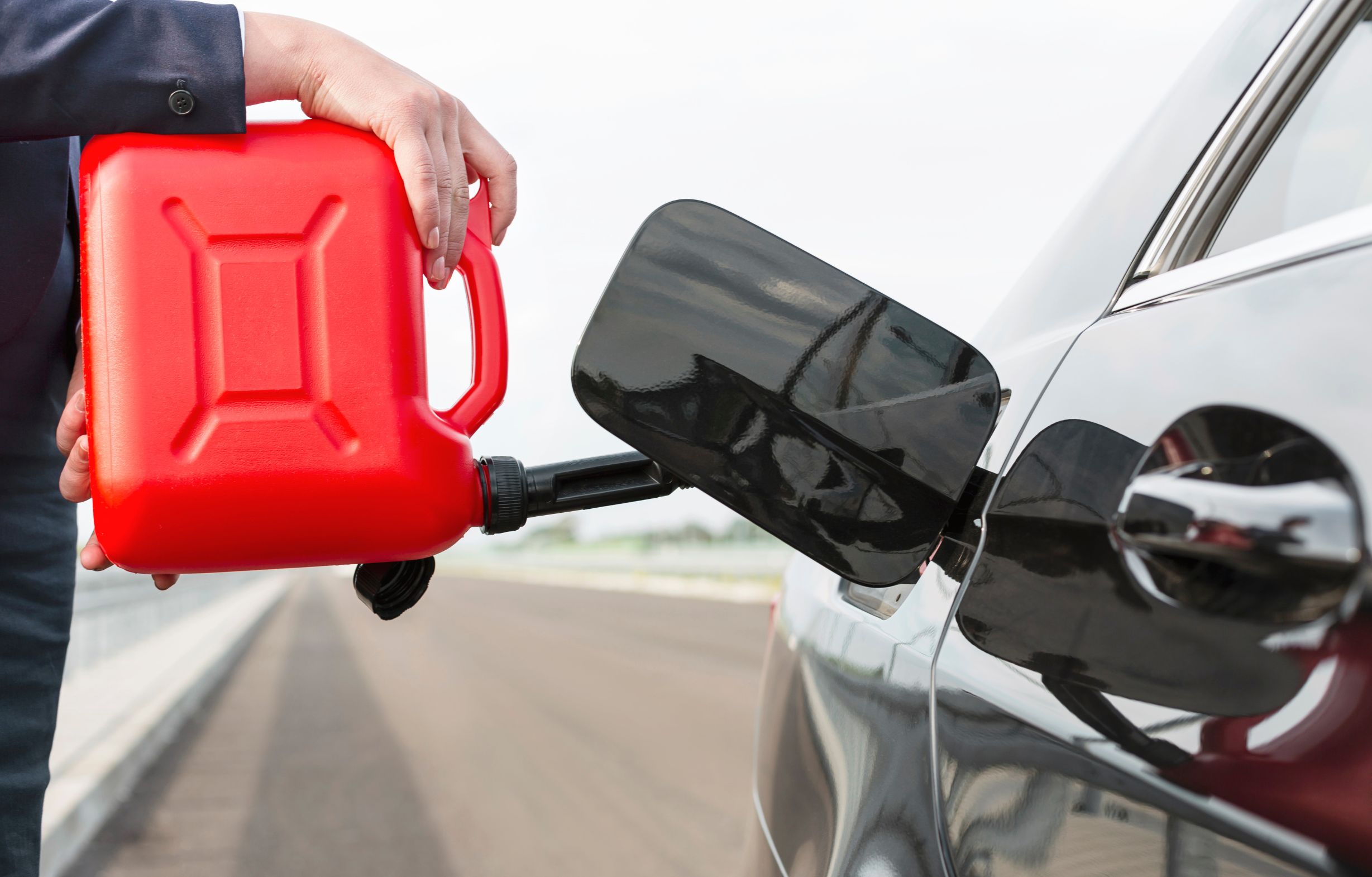
Emergency fuel delivery is one of the most quietly common roadside requests in Gilbert and the greater Phoenix area. People do not like to talk about it because it sounds avoidable, and often it is. Still, it happens for reasons that are easy to understand. A driver pushes the range a little too far on a busy day. A gauge is inaccurate. A teen driver borrows the car and does not mention the low fuel warning. A long detour or unexpected traffic delay changes the math.
When someone searches fuel delivery near me, they are usually hoping to avoid the hassle and cost of towing. In many cases, a small amount of delivered fuel is all it takes to get the vehicle back on the road and to the nearest station. That is the ideal outcome. But there are limits. If a diesel vehicle is mistakenly fueled with gasoline, or if the tank was run so dry that the vehicle now has priming issues, the call can become more involved than a simple fuel drop.
In Gilbert, fuel delivery calls often come from roads that are not remote in the wilderness sense, but are still inconvenient places to be stranded. Busy arterials, newer development areas, parking lots on the edge of commercial corridors, and connector roads can all leave a driver feeling more isolated than the map suggests. Heat amplifies the discomfort. So does poor cell phone battery, which tends to become a problem at exactly the wrong time.
General breakdown service covers the calls that do not fit neatly anywhere else
Then there are the breakdowns that are more ambiguous. The engine overheats. A belt fails. The transmission slips and the vehicle loses drive. A warning light flashes and the car enters limp mode. Steering becomes difficult. Brakes feel wrong. The vehicle vibrates severely at speed. In those moments, a search for emergency roadside assistance or mobile roadside assistance is less about a specific service and more about getting a qualified person to assess the situation.
This category is where judgment matters most. Some breakdowns can be stabilized enough to move the vehicle a short distance to a safer spot. Others should not be driven another foot. Overheating is a good example. Drivers sometimes want to nurse the vehicle home, especially if home is only a few miles away. That is understandable. It is also how a manageable cooling problem turns into severe engine damage. Likewise, a sudden oil pressure warning, an electrical burning smell, or brake failure symptoms should shift the focus away from convenience and toward immediate safety.
In the Gilbert area, the line between roadside help and towing is often determined by what can realistically be fixed where the vehicle sits. A dead battery can often be handled on site. A punctured tire may be managed if there is a good spare. A lockout can be resolved at the door. But overheating, drivetrain faults, steering issues, or major electrical failures usually require transport to a repair facility.
What a good roadside response looks like
Not all roadside service is equal, even when the service category sounds straightforward. The difference usually comes down to communication, arrival accuracy, and problem-solving skill. Drivers under stress remember three things clearly: whether they could reach someone, whether the ETA was realistic, and whether the technician understood the actual problem when they arrived.
A strong roadside response in Gilbert should account for location details that matter on the ground. “I’m at the shopping center” is not enough in a large parking lot with multiple entrances. “I’m on the shoulder” is not enough on a major road unless direction of travel, nearest cross street, and vehicle description are also clear. The better the information, the quicker the resolution.
It also helps when the provider can distinguish between services instead of forcing every issue into a tow. Plenty of drivers start by searching roadside assistance near me because they are not sure what they need. A useful dispatcher or technician can often clarify whether the problem sounds like a battery, lockout, tire issue, fuel shortage, or larger mechanical failure. That saves time and avoids mismatched equipment.
When drivers make the situation worse
A lot of roadside problems begin small and become expensive because people try to improvise under pressure. This is not a criticism. It is a predictable human response. Still, some mistakes come up often enough to mention.
Trying to drive on a badly deflated tire for “just one more mile” can destroy the tire and sometimes the wheel. Repeatedly cranking a weak battery can leave the vehicle harder to jump and may stress the starter. Pouring the wrong fuel into a vehicle creates a far bigger problem than running out. Using home lockout tricks on a modern vehicle can cause body and trim damage that costs far more than a professional lockout service. Continuing to drive an overheating vehicle because the gauge drops briefly after a cooldown can lead to major engine failure.
These are the moments when emergency roadside assistance earns its value. Sometimes the cheapest option is not the most obvious one in the first five minutes.
Practical steps to take while waiting for help
The period between placing the call and seeing the service vehicle can feel much longer than it is. A calm, deliberate approach makes that wait safer and more productive.
- Move to a safer location if the vehicle can still be driven without risking damage
- Turn on hazard lights and stay visible
- Share exact location details, including cross streets and direction of travel
- Stay inside the vehicle if traffic conditions make standing outside unsafe
- Keep your phone charged and available for callback updates
If the vehicle is in a parking lot or residential area, that guidance may seem basic, but even there, location accuracy matters. In a sprawling shopping center, one wrong entrance can add ten or fifteen minutes to a response. On a divided road, being on the wrong side of the street can create the same delay.
How Gilbert drivers can reduce the most common roadside calls
No one eliminates roadside risk completely, but a few habits prevent a large share of common breakdowns. The most important one in Arizona is proactive battery replacement. If a battery is approaching the end of its service life, replacing it before peak summer often costs less and causes far less disruption than waiting for failure. Tire checks matter too, especially before longer drives or after noticing a slow leak, curb strike, or pressure warning. Keeping at least a quarter tank of fuel is not glamorous advice, but it is one of the simplest ways to avoid a needless service call. And every driver should know whether the vehicle actually has a spare, where the lock key is, and how the owner’s manual addresses lockouts or jump-starting procedures.
Those small habits matter because roadside calls rarely happen at convenient times. They happen when you are late, tired, distracted, or carrying too much on your mind. That is true in Gilbert, true in the wider East Valley, and true anywhere people depend heavily on their cars for daily life.

The good news is that the most common roadside problems are also the most fixable, provided help arrives with the right tools and a realistic understanding of the situation. Whether someone is searching roadside assistance Gilbert AZ after a dead battery in a neighborhood driveway or emergency roadside assistance near me after a tire failure on a busy corridor, the same principle applies. Fast, competent roadside service turns a bad interruption into a manageable delay. In a place where heat, distance, and daily driving demands all work against you, that kind of help is not a luxury. It is part of owning a vehicle responsibly.
Our Sponsor
EZ3 Roadside Rescue Services
EZ3 Roadside Rescue Services is a Gilbert-based roadside assistance provider serving drivers throughout Gilbert and the greater Phoenix, Arizona area. The company provides fast, professional roadside assistance for common vehicle emergencies, including flat tire repair and tire changes, battery jump starts, emergency fuel delivery, vehicle lockout assistance, lug nut removal, battery replacement, and emergency breakdown assistance. EZ3 Roadside Rescue Services is available 24/7 to help stranded motorists get safely back on the road.
Address:
922 N Colorado St,
Gilbert,
AZ
85233,
United States
Phone: (480) 710-5902
Business Hours:
- Open 24/7 — Emergency Roadside Assistance Available
Follow Us: